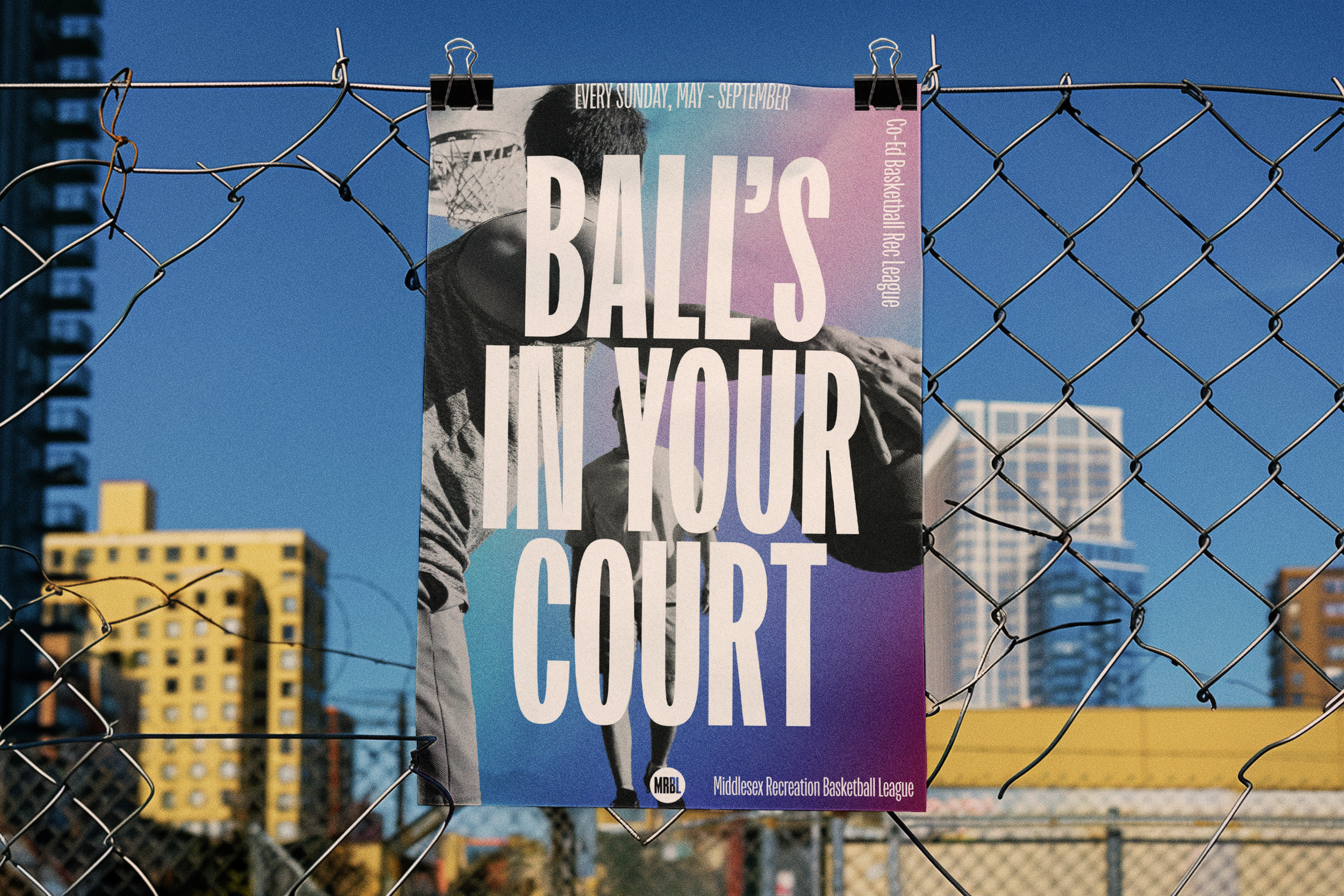
Client: Middlesex Recreation Basketball League
Year: 2024
Role: Art Direction, Photography, Concept Development
Team: Alex Sheena, Connor Ross
MIDDLESEX REC.
We turned a recreational basketball league into a social icebreaker, designing a campaign to help people meet through play. The objective was to drive sign-ups for a recreational basketball league by positioning it as a low-pressure, social way to meet new people. Research consistently supports the premise underneath all of it: structured extracurriculars remain one of the most reliable environments for forming meaningful adult friendships, in part because they provide repeated contact, shared stakes, and a ready-made conversation topic. The campaign is essentially packaging that sociology into something that feels like fun rather than a self-help prescription.



LOOKING FOR CONNECTION
Making new friends as an adult is weirdly hard. People want to meet others in real life, but don't always know how to do it without it feeling forced or awkward. Recreational sports leagues exist, but are often perceived as competitive, cliquey, or intimidating for newcomers. The insight? People form the strongest connections when they share an activity. Extracurriculars like sports, classes, and hobby groups are one of the most natural ways to meet people because they remove conversational pressure, create built-in shared experiences, and give you a reason to show up again. A recreational basketball league already offers all of this. It just doesn't always communicate it. Our idea was to turn basketball language into social language. Using familiar on-court phrases as double meanings, the campaign reframes joining the league as making a move, socially, romantically, or professionally.

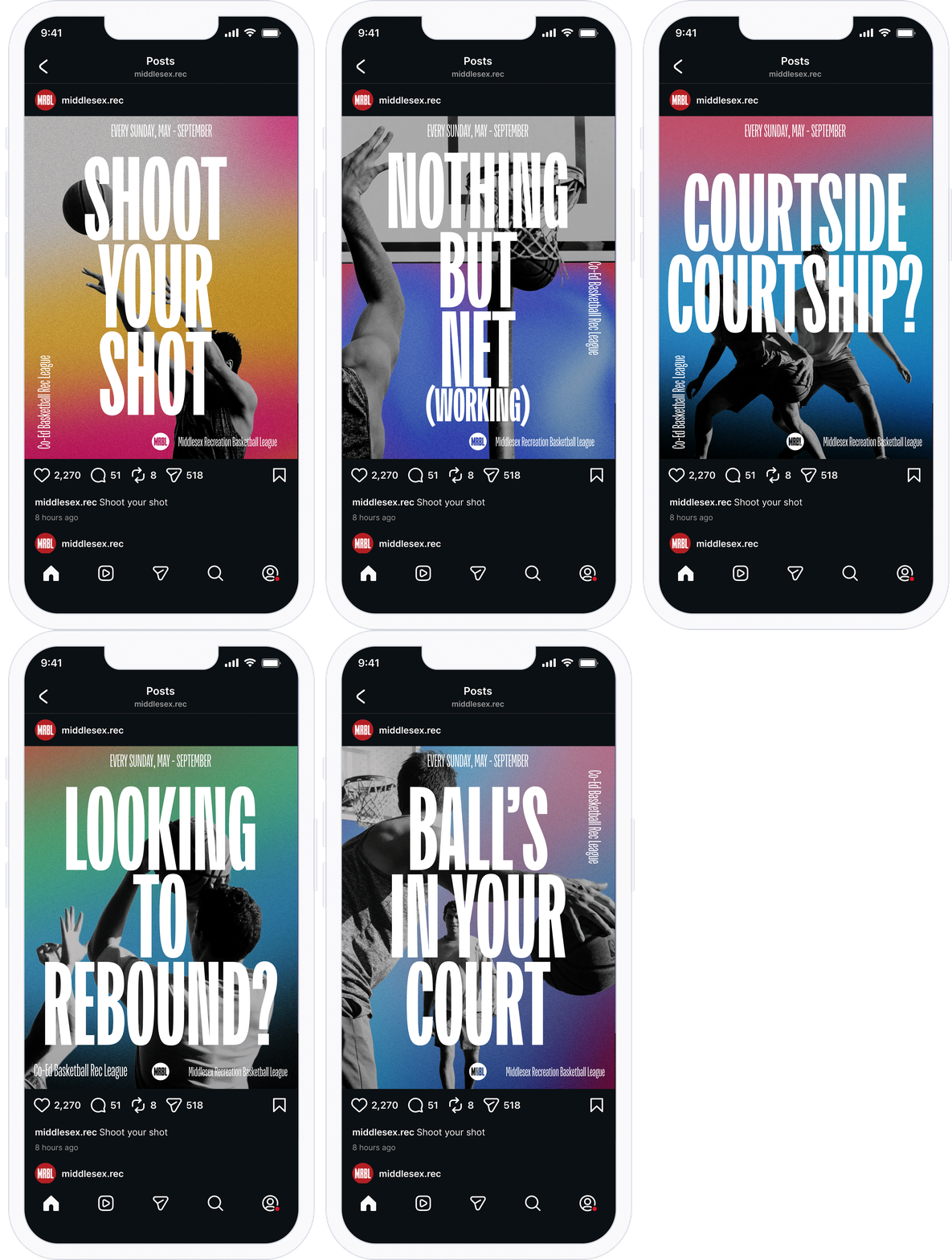
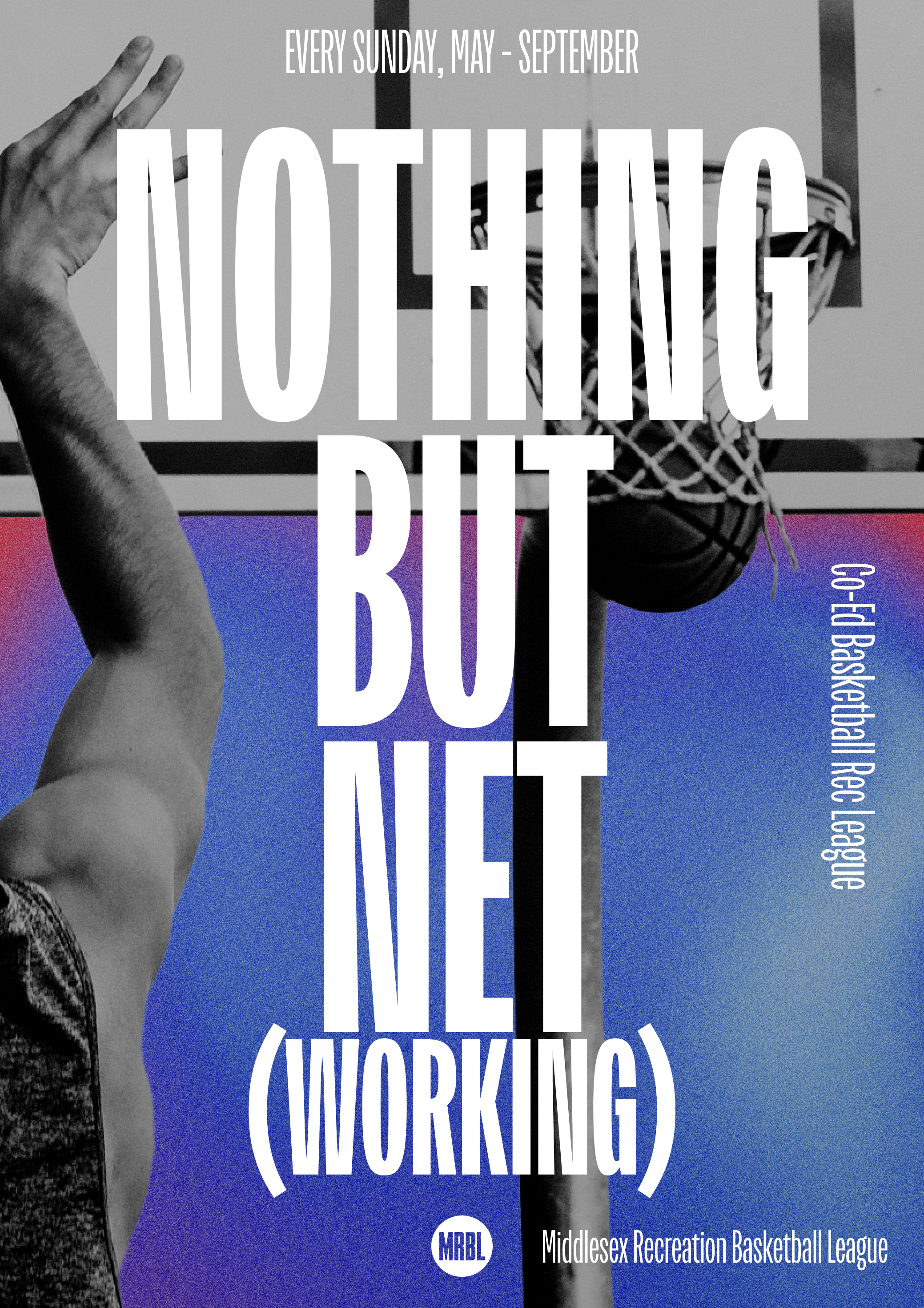


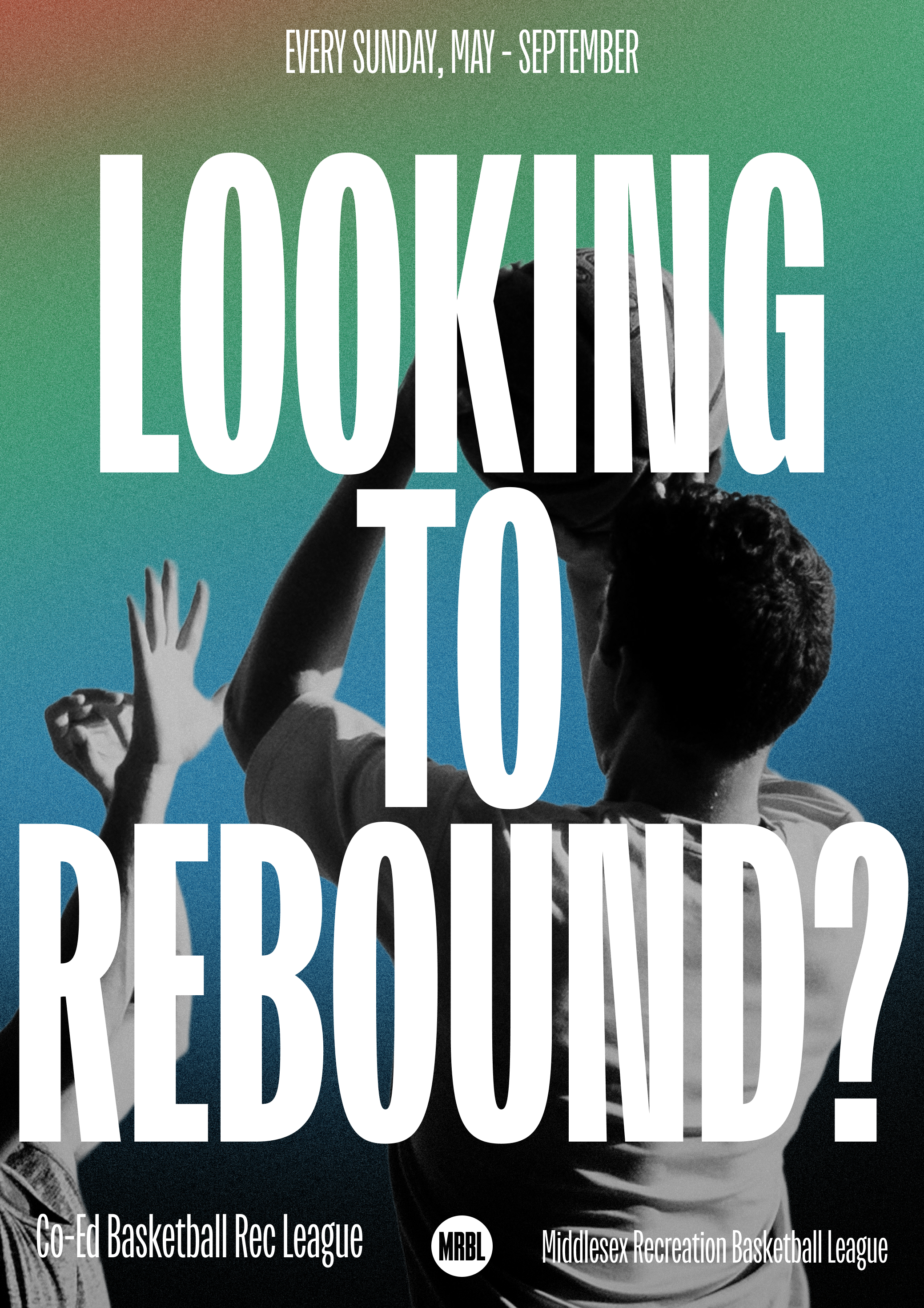
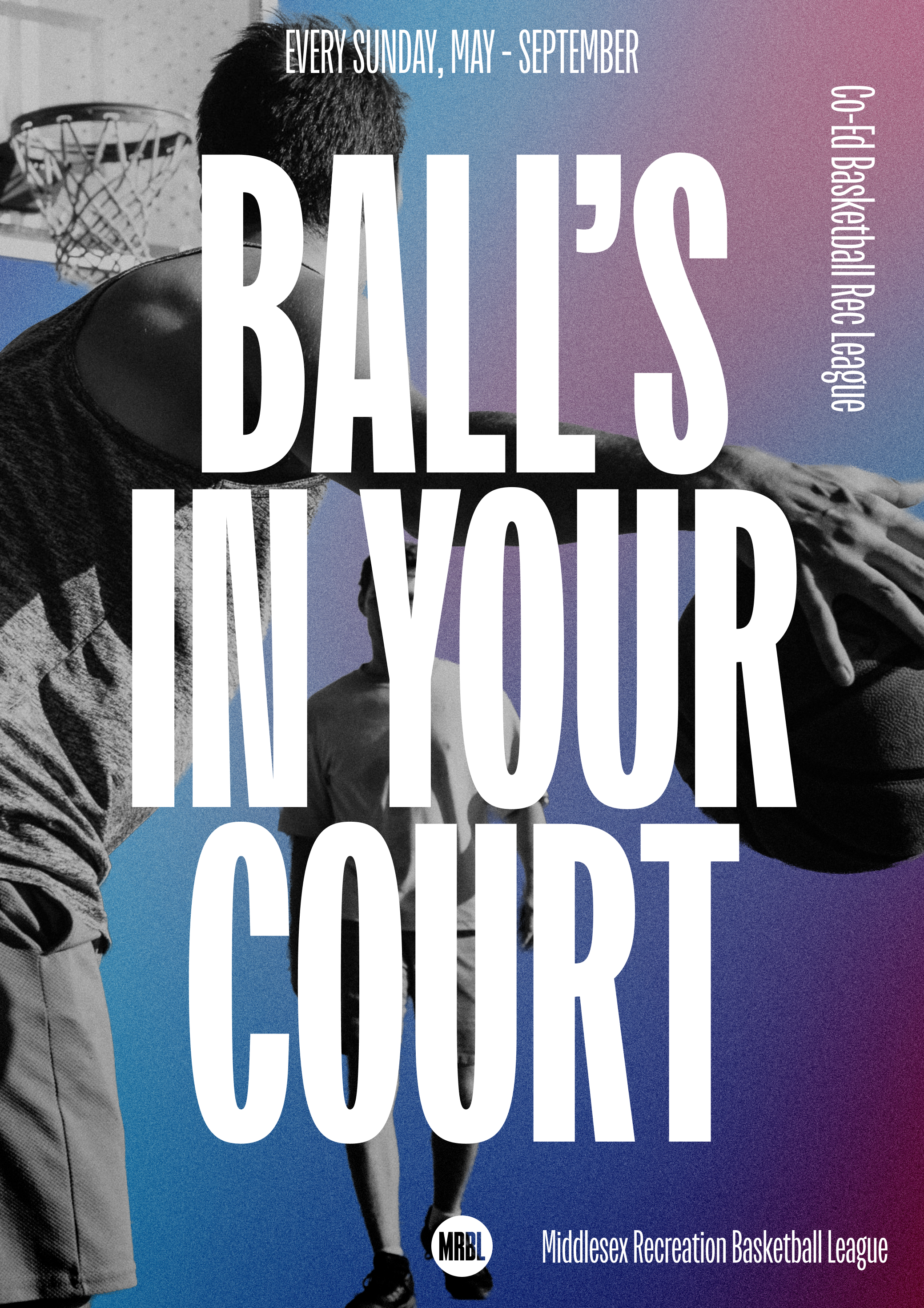
A RANGE OF RELATIONSHIPS
The primary goal is to attract people who use hobbies to build community broadly. Using the taglines “shoot your shot” or “looking to rebound?” widens the appeal beyond people looking strictly for friends and nods to the reality that plenty of social connections begin as something more ambiguous. Unlike the others, “Nothing but networking” introduces a corporate register that’s less playful and may not work for everyone, but does touch on a group of people that are looking more transactional relationships. The choice to include these conflicting taglines within the campaign is a deliberate decision that acknowledges the full spectrum of why adults seek out new people in a more honest way than ones that sanitize the motivation into pure wholesome networking. The campaign relies on the premise that people are hungry for the kind of connection that happens as a byproduct of doing something rather than as the explicit goal. By using different tones, different entry points, and different reader relationships that orbit a single coherent idea, the campaign is meant to have a universal appeal.